
Chevrolet Trax: Master cylinder replacement
Chevrolet Trax (2013-2022) Workshop Manual / Brakes / Hydraulic Brakes / Repair instructions / Master cylinder replacement
Removal Procedure
WARNING: Refer to Brake Fluid Irritant Warning .
CAUTION: Refer to Brake Fluid Effects on Paint and Electrical Components Caution .
- Place the ignition switch in the OFF position.
- Remove the battery. Refer to Battery Replacement .
- Disconnect the brake fluid level indicator switch electrical connector.
- Using a suitable suction device, remove and properly discard the brake fluid from the brake master cylinder reservoir.
.gif)
Fig. 16: Clutch Master Cylinder Reservoir Hose
- On manual transmission equipped vehicles, disconnect the clutch master cylinder reservoir hose (1).
.gif)
Fig. 17: Master Cylinder Outlet Port
- Disconnect the master cylinder secondary brake pipe fitting (1).
- Cap the brake pipe fitting and plug the master cylinder outlet port to prevent brake fluid loss and contamination.
.gif)
Fig. 18: Master Cylinder Primary Brake Pipe Fitting
- Disconnect the master cylinder primary brake pipe fitting (1).
- Cap the brake pipe fitting and plug the master cylinder outlet port to prevent brake fluid loss and contamination.
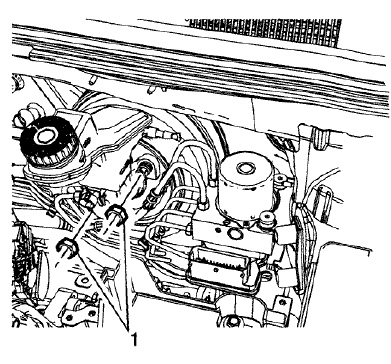
Fig. 19: Brake Master Cylinder And Nuts
- Remove the master cylinder nuts (1).
- Remove the brake master cylinder.
.gif)
Fig. 20: Master Cylinder Seal
- Remove the master cylinder seal (1).
- Inspect the master cylinder seal for damage or deterioration and replace, if necessary.
- Remove the brake fluid level indicator switch, if necessary. Refer to Brake Fluid Level Indicator Switch Replacement.
- Remove the master cylinder reservoir, if necessary. Refer to Master Cylinder Reservoir Replacement.
Installation Procedure
- Install the master cylinder reservoir, if removed. Refer to Master Cylinder Reservoir Replacement.
- Bench bleed the master cylinder. Refer to Master Cylinder Bench Bleeding.
- Install the brake fluid level indicator switch, if removed. Refer to Brake Fluid Level Indicator Switch Replacement.
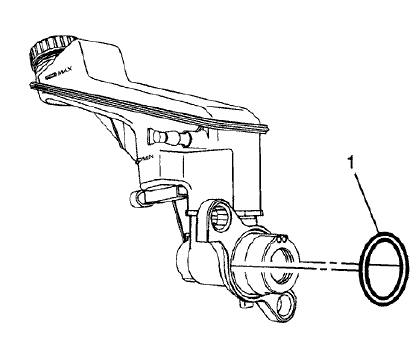
Fig. 21: Master Cylinder Seal
- Install the master cylinder seal (1).
- Install the master cylinder to the power vacuum brake booster.
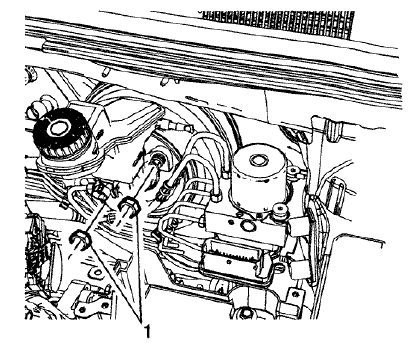
Fig. 22: Brake Master Cylinder And Nuts
CAUTION: Refer to Fastener Caution
- Install the master cylinder nuts (1) and tighten to 19 (14 lb ft).
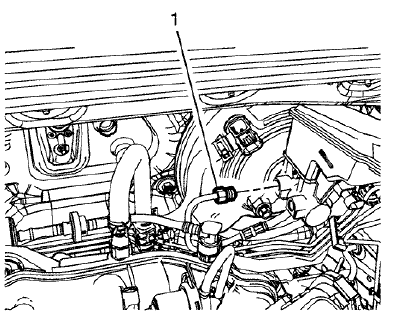
Fig. 23: Master Cylinder Primary Brake Pipe Fitting
- Connect the master cylinder primary brake pipe fitting (1) and tighten to 18 N.m (13 lb ft).
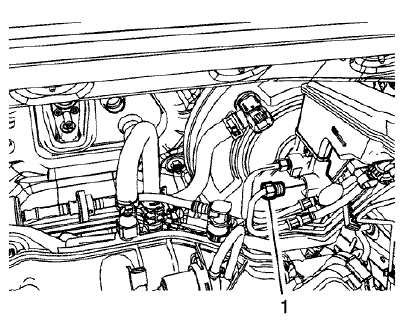
Fig. 24: Master Cylinder Outlet Port
- Connect the master cylinder secondary brake pipe fitting (1) and tighten to 18 N.m (13 lb ft).
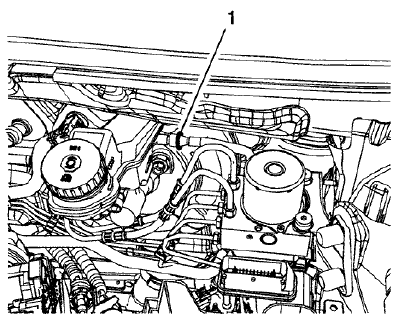
Fig. 25: Clutch Master Cylinder Reservoir Hose
- On manual transmission equipped vehicles, connect the clutch master cylinder reservoir hose (1).
- Connect the brake fluid level indicator switch electrical connector.
- Install the battery. Refer to Battery Replacement .
- Bleed the hydraulic brake system. Refer to Hydraulic Brake System Bleeding (Manual), Hydraulic Brake System Bleeding (Pressure).
READ NEXT:
 Master cylinder bench bleeding
Fig. 26: Depressing And Releasing Primary Piston
WARNING: Refer to Brake Fluid Irritant Warning .
CAUTION: Refer to Brake Fluid Effects on Paint and Electrical
Components
Caution .
Secure the mou
Brake, accelerator, and clutch pedal replacement
Removal Procedure
Remove the battery tray. Refer to Battery Tray Replacement .
Fig. 29: Power Vacuum Brake Booster Bolts
Remove the power vacuum brake booster bolts (1).
Fig. 30: Brake Pedal
Brake proportion valve replacement
Removal Procedure
WARNING: Refer to Brake Fluid Irritant Warning .
CAUTION: Refer to Brake Fluid Effects on Paint and Electrical
Components Caution .
Remove the battery. Refer to Battery Replacemen
SEE MORE:
All-Wheel Drive
Warning
When you are doing this
inspection, the vehicle could
move suddenly. If the vehicle
moves, you or others could be
injured.
Before starting this check, be
sure there is enough room
around the vehicle. It should be
parked on a level surface.
Apply the parking brake. Be
ready to apply th
DTC B1405 (Front and rear park assist - ud5): control module voltage
reference output 2
Diagnostic Instructions
Perform the Diagnostic System Check - Vehicle prior to using this
diagnostic procedure.
Review Strategy Based Diagnosis for an overview of the diagnostic
approach.
Diagnostic Procedure Instructions provides an overview of each
diagnostic category.
DTC Descriptors
D
© 2019-2026 Copyright www.chevtrax.com
